
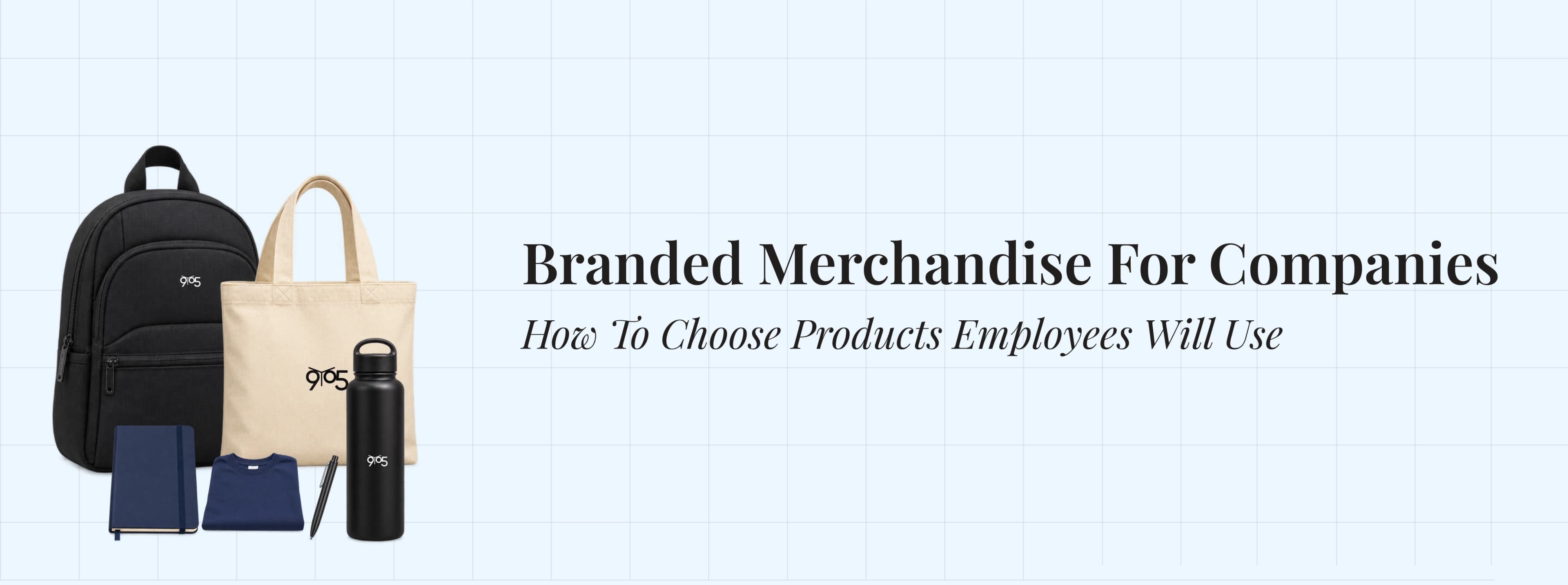
Branded Merchandise for Companies: How to Choose Products Employees Will Use
Most merchandise problems start after the order is placed. The boxes arrive, the logo looks fine, and nobody uses anything. This guide is a decision guide: how to choose, how to brand, and how to run the programme.
What Is Branded Merchandise for Companies and Why Does It Matter?
Branded merchandise for companies is any useful product carrying a company’s name, logo, or message, made for employees, teams, or event guests. Unlike a one-off present, employee merchandise is built for daily use. That keeps your identity visible and gives new joiners something that says they belong.
It sits within the wider practice of how corporate gifting works, but the goal differs. A gift marks a moment, while merchandise earns its place in a routine. Buyers can compare options on a corporate merchandise marketplace before committing to a bulk order.
How to Choose Custom Company Merchandise Employees Will Actually Use
Run every shortlisted item through four questions:
- Would they use it without the logo? If not, it will end up in a drawer.
- Where will it live? A desk, a bag, a wardrobe, or a home office each suits different products.
- Who is it for, and how many? Check sizes, climate, and role. A field team and a desk team rarely want the same thing.
- Who chooses? Letting employees pick from a small catalogue often beats guessing for them.
For item-level options, see these 15 company swag ideas. This guide does not repeat them.
Popular Types of Logo Merchandise for Employees and Corporate Events
Group logo merchandise for employees by where it gets used:
- Desk: notebooks, pens and organisers that sit in view every day.
- Wearables: hoodies, tees and caps that carry your identity outside work.
- Carry: bags, bottles and tiffins that travel with people.
- Tech: electronics such as chargers, cable organisers and audio accessories for hybrid work.
- Event: lightweight items for conferences and corporate event merchandise needs, where volume matters more than longevity.
Distributed teams usually need a different mix, which our guide to remote employee kits covers. For new hires, plan around onboarding kits for new joiners.
How to Customise Branded Merchandise With Your Company Logo
The method should match the product. Use this as a starting point for branded merchandise with your company logo:
Method | Best for |
| Screen printing | Large runs with simple, few-colour artwork |
| Embroidery | Polos, caps and jackets |
| DTF printing | Small runs or multicolour designs |
| Engraving | Metal drinkware and similar hard surfaces Embossing or |
| Embossing or debossing | Notebooks and leather-finish items |
Printing, engraving and embossing are widely offered. Ask any supplier whether they handle embroidery or DTF before you plan around them.
Whatever the method, send a vector logo file and Pantone colour codes. Approve a mock-up before production, and choose one placement. A single, well-placed logo looks intentional. Browse the product catalogue to see which items take branding well.
How to Choose Quality, Practical and Budget-Friendly Corporate Merchandise
Budget-friendly corporate merchandise is about cost per use, not the lowest price. A ₹300 item used daily for a year beats a ₹100 item discarded in a week.
- Set tiers by recipient. Everyday items suit all staff. Step up for long service, leadership or key milestones, ideally through a rewards and redemption portal.
- Approve a sample. Check material, finish, and logo clarity before the full order.
- Avoid the cheapest base item. A weak product makes even good branding look careless.
- Keep the logo restrained. Overbranding turns merchandise into a giveaway.
If sustainability matters to your brand, eco-friendly merchandise is worth shortlisting.
How NineToFive Helps Businesses Source Branded Merchandise for Companies
Choosing the product is half the job. The other half is running it: a one-off bulk order, or an ongoing employee merch store.
NineToFive’s company merch store works as a merchandise marketplace for bulk procurement and individual employee ordering. Role-based access keeps ordering controlled across teams and locations. Branded microsites give each programme its own storefront, while centralised fulfilment, warehousing and inventory keep stock visible. Orders are delivered across India.
You can also explore the gifting partner network behind the catalogue. To plan your programme, book a demo or write to support@ninetofive.in .
Frequently Asked Questions About Branded Merchandise for Companies
1. What is branded merchandise for companies?
Branded merchandise for companies is useful products carrying a company’s logo or message, made for employees, teams or events. Examples include apparel, drinkware, stationery, and tech accessories. Its purpose is daily use and visibility.
2. What makes employees actually use company merchandise?
Three things: it is useful without the logo, it fits a real routine, and it suits the person. Ask whether they would buy it themselves, where it will sit, and whether sizes and climate are covered.
3. Which logo printing method is best: screen printing, embroidery, or engraving?
It depends on the product. Screen printing suits large, simple runs on bags and apparel. Embroidery suits polos and caps. DTF handles small or multicolour runs, and engraving suits metal drinkware. Ask your supplier which methods they offer for each item, then approve a mock-up before production.
4. Should employees be allowed to choose their own company merchandise?
Often, yes. A small catalogue lets people pick what they will really use, which cuts waste and sizing errors. Keep the range manageable, set a budget per person, and use role-based ordering so each team sees only what is meant for them.
5. Can companies manage branded merchandise for different teams and locations?
Yes. A merch store with role-based access lets each team order only what it is allowed to, within set limits. Central inventory shows what is in stock across locations, so HR avoids duplicate buying and shortages. NineToFive offers controlled ordering and centralised warehousing for this.
6. How do you approve merchandise quality before a bulk order?
Request a physical sample or a digital mock-up before production starts. Check material, finish, logo clarity, colour match, and sizing against a written spec sheet. Approve one sample in writing, then compare the delivered batch against it so every unit matches.